
CONCEPT
ReBURN reflects on the quiet power of transformation through shared objects, personal histories, and ritual acts. By reconfiguring domestic tools of care into vessels of combustion, the work explores how intimacy and violence often coexist in the same forms. The hairbrush—an object tied to grooming, discipline, inheritance, and beauty—becomes a symbolic site where control and tenderness meet. The burning process is both literal and metaphorical: a slow unraveling of memory, lineage, and cultural expectation, where destruction is not the end, but a passage toward revealing what remains. The work considers the fragility of what we pass on, and how even in loss, something enduring is carried forward.

CREATIVE OVERVIEW
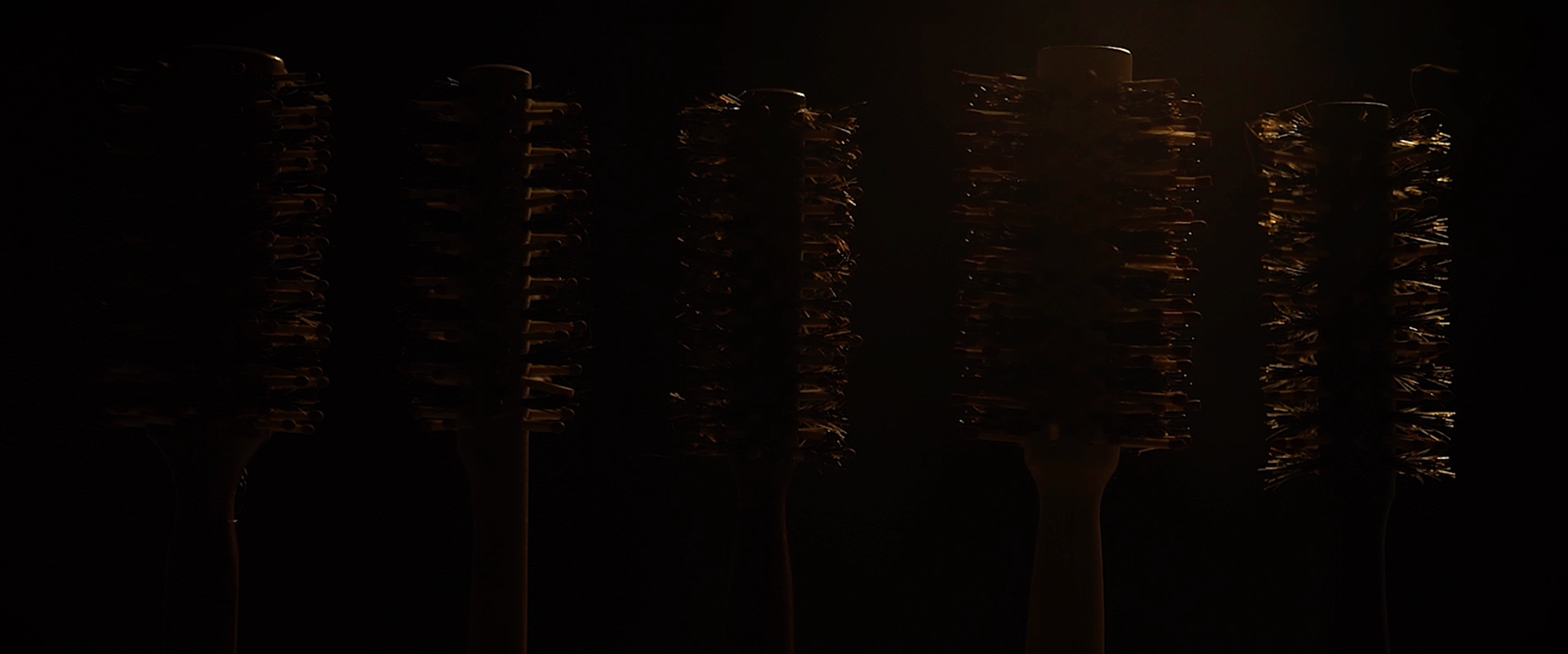
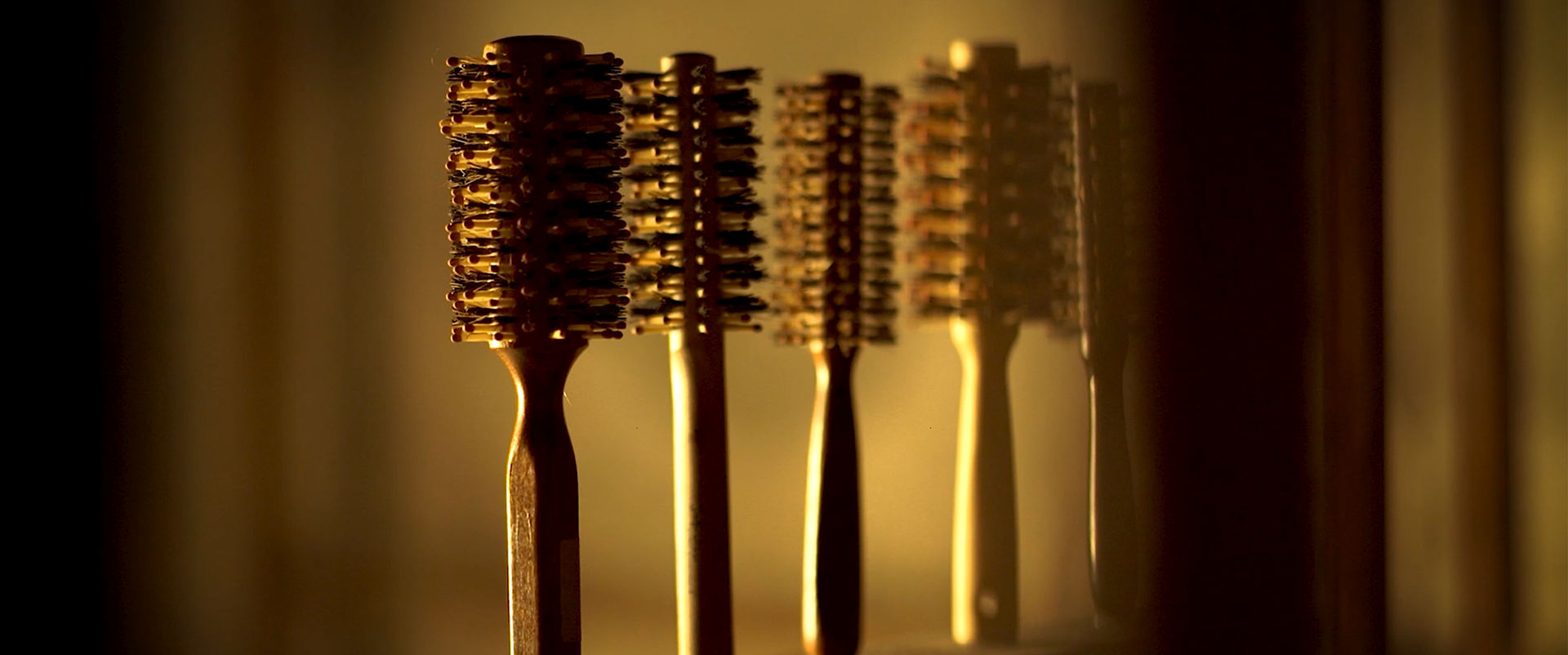
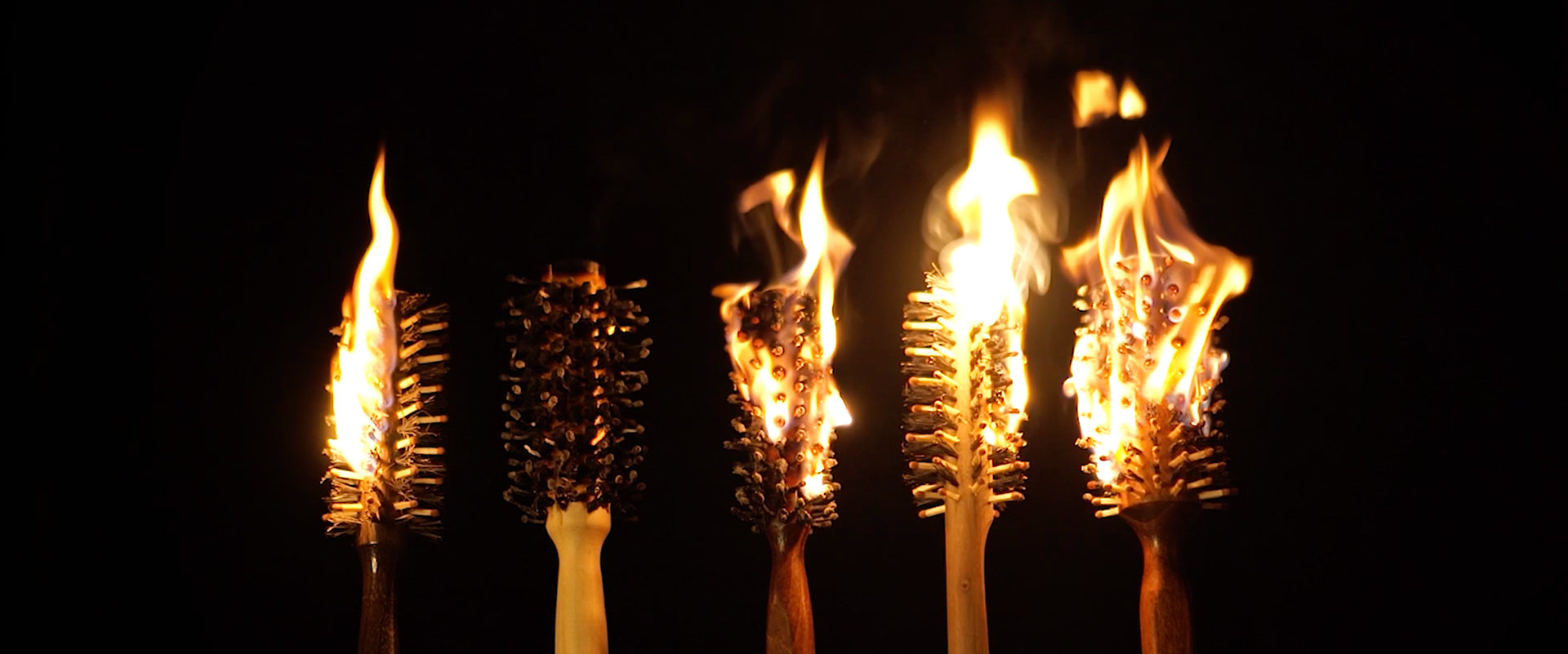
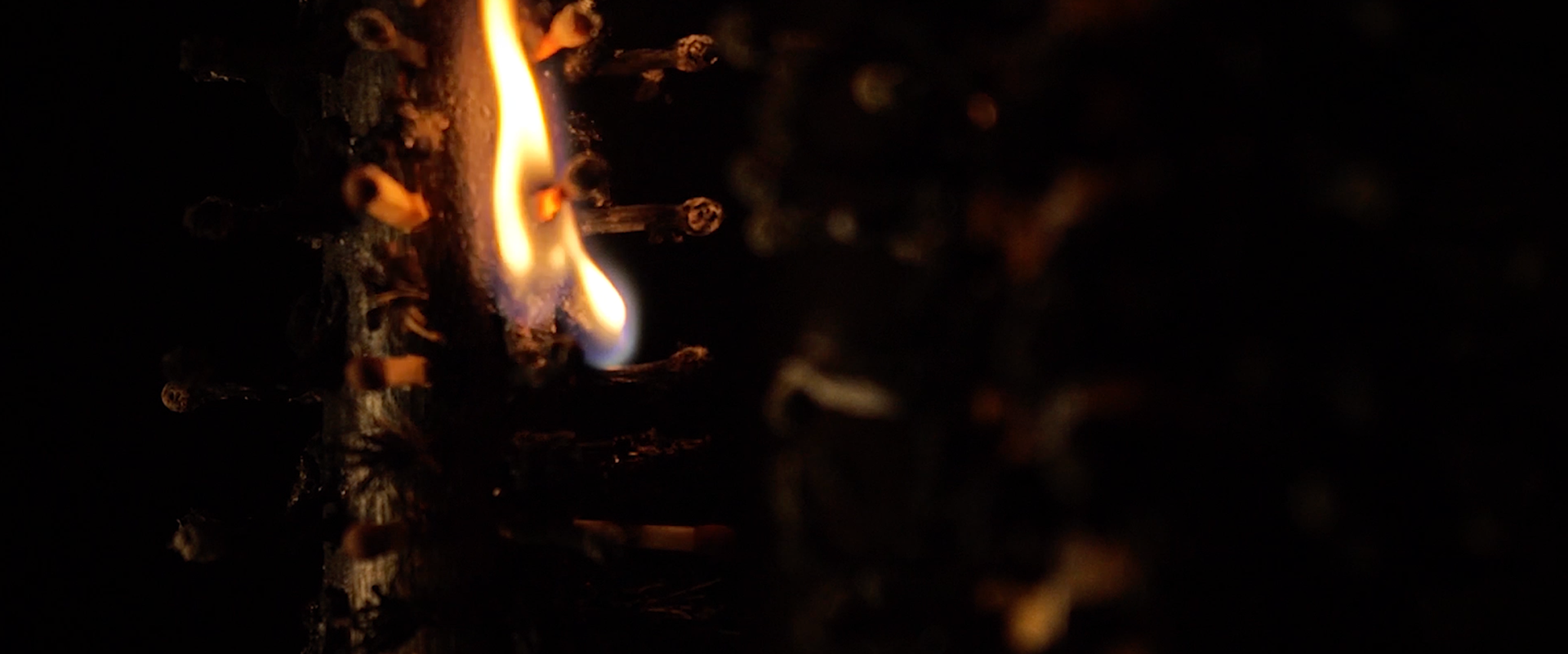
This installation assembles found objects—women’s hairbrushes—transformed into a living sculpture whose bristles are replaced with matchsticks. Arranged in fragile harmony, these tools of ritual become charged vessels of narrative.
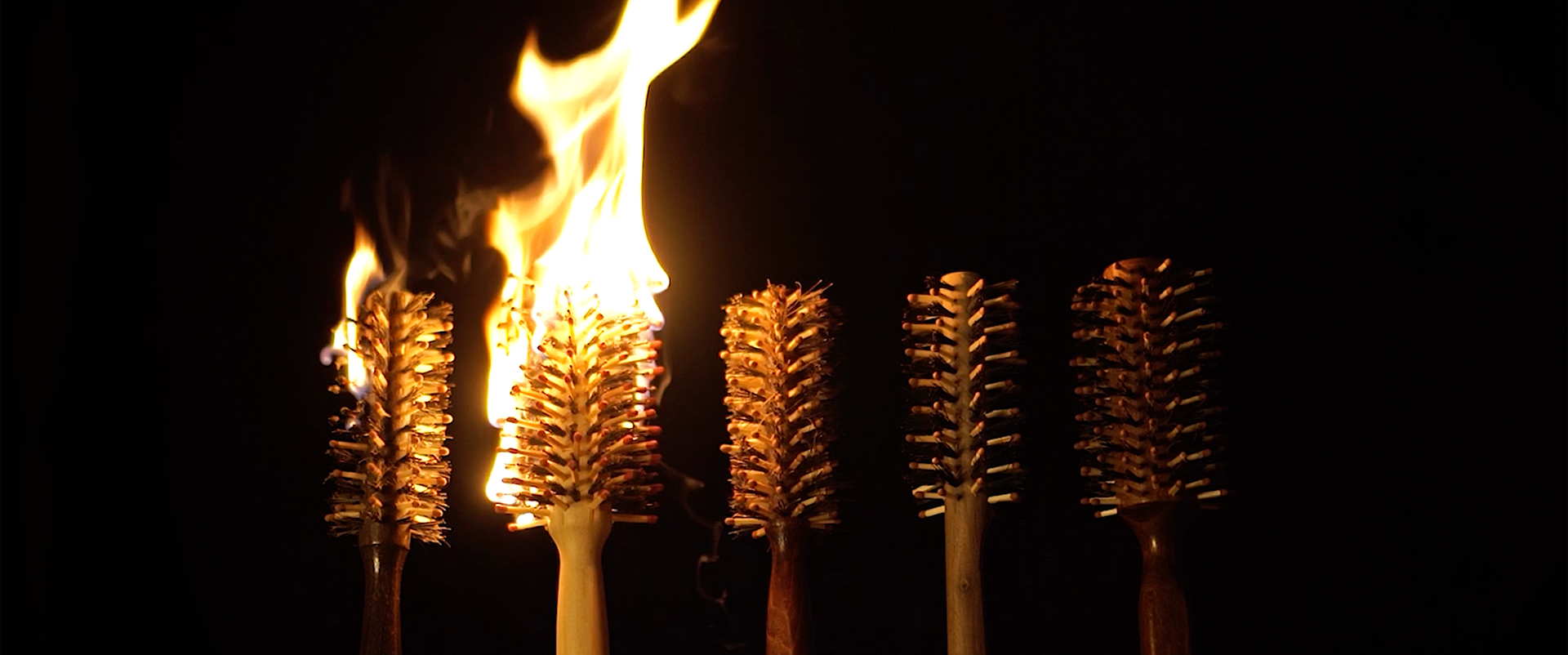
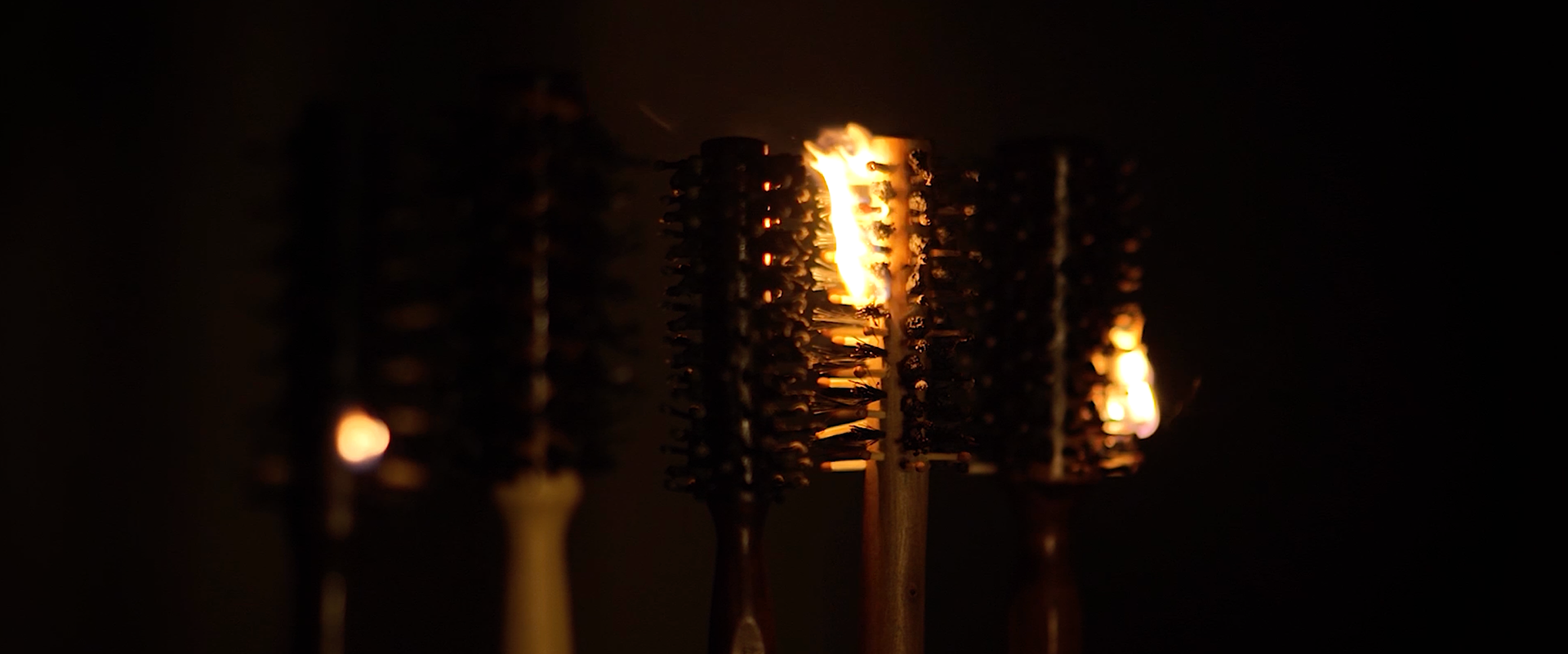
The work unfolds in three ephemeral states: unlit, ignited, and burnt out. In its dormant phase, the sculpture holds quiet tension—anticipation flickers in the potential of the matchstick bristles. Once ignited, the fire does not erupt, but spreads—brush to brush—in a slow, cascading choreography. This chain reaction mirrors the way histories, rituals, and traumas move between women: indirectly, gradually, and with irreversible effect.
The combustion is not instantaneous, but contagious—a creeping passage of flame that animates the brushes, turning them into momentary beacons of transformation, destruction, and catharsis. As the fire consumes the material, what remains is a shadow of what once was—charred, silenced, and still.
This is a sculpture that resists preservation. Its truth exists only in the act of burning—a gesture that can only be witnessed, never held.
ROLE IN THE WORK
This is an installation by the conceptual artist, Elena Sammouta. One of the brushes in the piece was originally mine—a personal object passed down from my mother. Contributing it to the work felt like offering a small part of my own history into a shared, unfolding narrative.
Alongside Photini Symeou, I supported the documentation of the ignition process. Together, we recorded the slow, chain-like burn as it moved between brushes. It was a quiet act of witnessing—holding space for something impermanent, intimate, and irreversible.